Why strokes are more common in winter
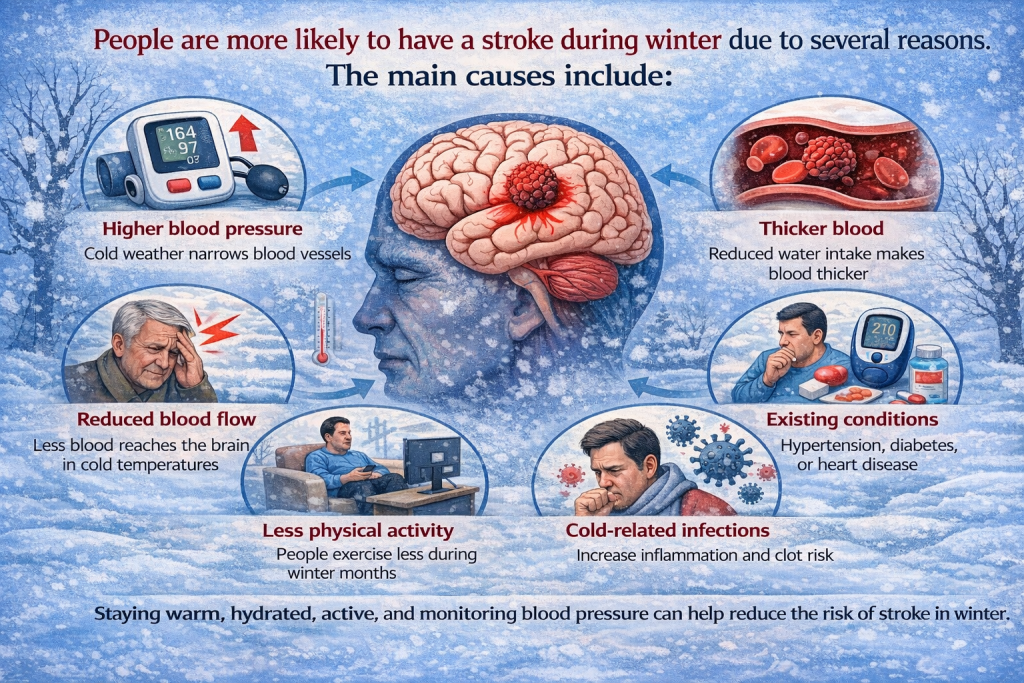
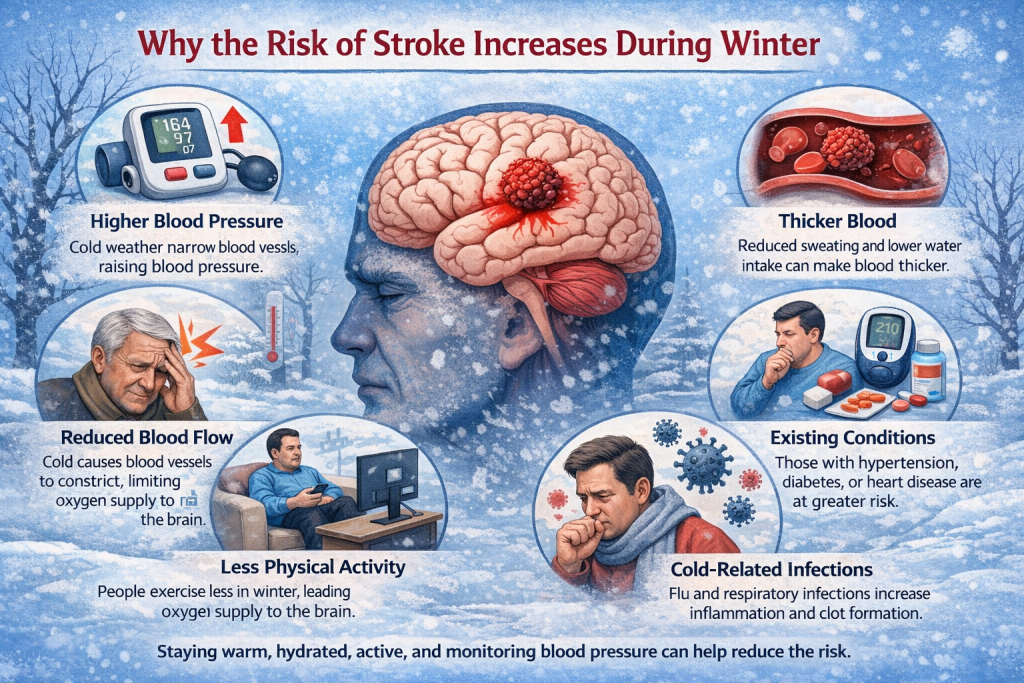
- Increase in blood pressure
- Cold weather causes blood vessels to narrow
- This raises blood pressure
- High blood pressure is the leading cause of stroke
- Blood becomes thicker
- People sweat less and often drink less water in winter
- This makes the blood thicker
- Thick blood increases the risk of clots, which can cause a stroke
- Constriction of blood vessels
- Cold temperatures reduce blood flow
- Less oxygen reaches the brain and heart
- Reduced physical activity
- People tend to exercise less in cold weather
- This can lead to weight gain and higher cholesterol
- Both increase stroke risk
- Existing health conditions
- People with high blood pressure, diabetes, or heart disease are at higher risk
- Winter can worsen these conditions
- Cold-related infections
- Flu, pneumonia, and other infections are more common in winter
- Infections cause inflammation, increasing the chance of blood clots
How to reduce stroke risk in winter
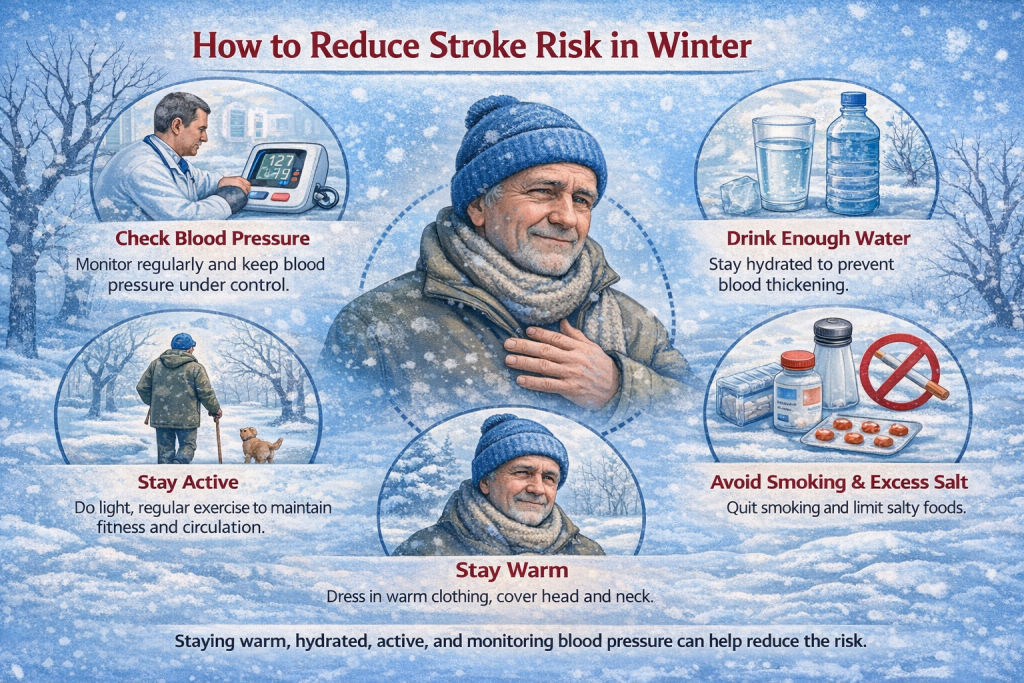
- Check blood pressure regularly
- Drink enough water
- Stay warm, especially the head and neck
- Do light but regular exercise
- Avoid smoking and excessive salt
- Take prescribed medicines regularly